

Our songbirds are plentiful when ears and eyes are open. I must say, the little ones are my absolute favorites. My husband and I enjoy hanging our bird houses, specifically for the little guys!
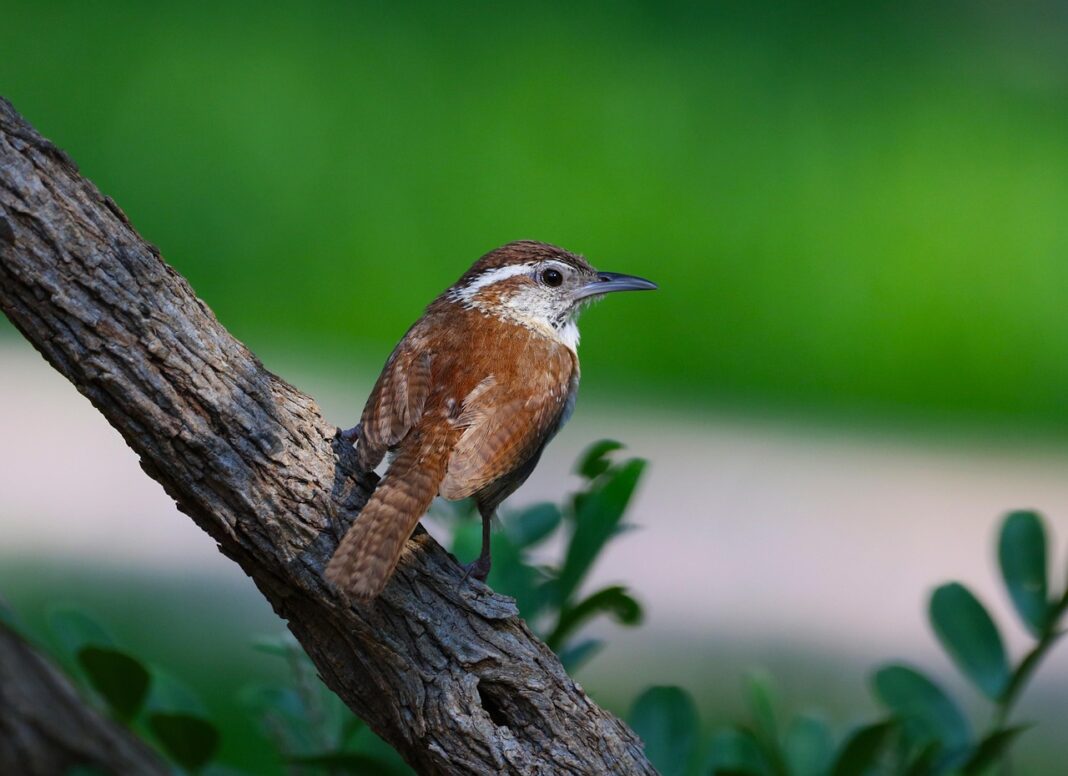
Starting with our #1 fav is the Wren. New Jersey is home to several species but looks like one is a year-round friend. The Carolina Wren is most often seen and heard. These cute, rather round or plump in appearance, are brownish-red with a tannish underbelly. The wings and tail are slightly darker with noticeable barring. Upon close look it seems as tho’ they’ve added an eyebrow white liner and white chin. Beaks are and narrow which, as in most birds serve a purpose. These style beaks usually indicate insect eaters as opposed to shorter, wider beaks seen on seed eaters. Their musical up and down elongated warble is quite something to hear. This wren prefers residential areas near your gardens and low brush.
The House Wren is also small and brown, migrating back to NJ in spring searching for birdhouses and various nooks and crannies for nesting.
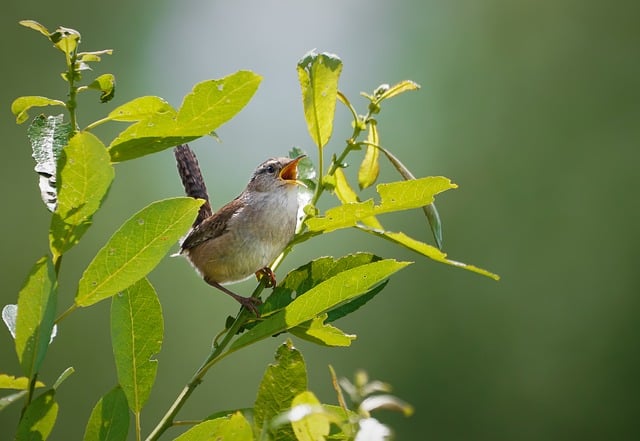
The Marsh Wren is prominent along the coast around marshes and cattail areas. Their call is said to resemble a bubbling warble.
Last is the Winter Wren, a rather elusive lil guy who is small & dark, usually found in larger older woods and pines. I was surprised to find the Carolina Wren is known to put out several broods in one season!
With warmer winters & discovery of home feeders, they’ve enlarged their northern habitat.
Another all-time favorite and by far a 10 on the cuteness range is the Chickadee! These small, fun little birds are often seen as friendly towards humans by acting almost tame at times. Maybe their curiosity and trust in humans? As a child, during winter, my dad and I would stick our hands filled with seed out the den window near a feeder in the white pine for these lil wonders to land and eat!
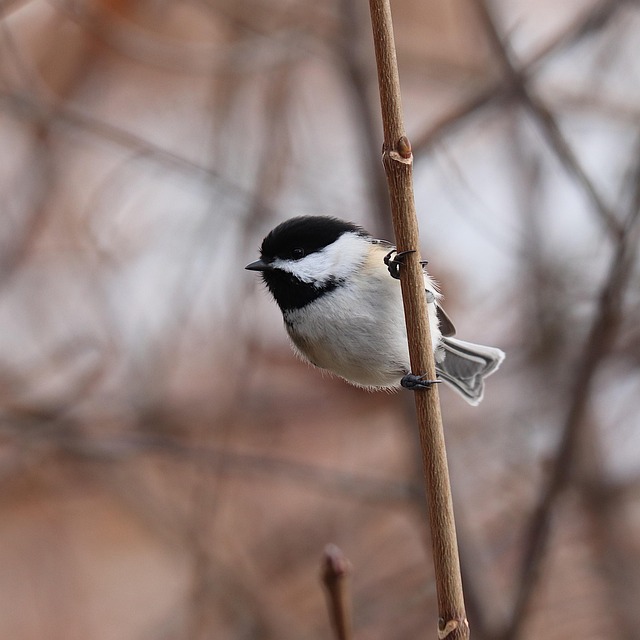
Wild birds are eating from our hands. Little white cheeks and bellies with a classic black cap & throat while sporting grey wings and tails. The call is a kind of a soft buzzing “chick-a dee-dee-dee”. They are year-round residents in Jersey, frequenting feeders and suet stations. Like Wrens, they too are ferocious insect eaters often seen as entertaining by hanging upside down.
Family groups are often seen together, usually found in residential areas, parks and woodsy areas. As Wrens, Chickadees nest in birdhouses and holes in trees when available. The Black-capped Chickadee, calling out “fee bee” can be found in the northern US and Canada. Similar to the Black-capped is the Carolina Chickadee, which is a tad smaller and found in a more southern range. This bird has a clear whistling song featuring 4 notes.
Yet another species can be found in the forests of our western mountain areas. These Chick-a-dees sport a white stripe above the eyes. Life spans are about 11 years for Carolina’s; however, many new young offspring don’t always survive their first winter. The oldest Chick-a-dee was said to be just over 12 years! Mountain Chick-a-dees usually live shorter 1.5 years due to harsher winters, while Black Capped show a 2.5-year life span.
Third in the tiny bird favorites is the Tufted Titmouse, the most common in our eastern states. Small little birds sporting a tuft or “mohawk doo” are grey head, back and wings with a little rust color under wings along side and a little black above the beak. Almost electric in behavior, Titmice are very energetic, keeping up with others, and often mixing company with Chick-a-dees and even Nuthatches.
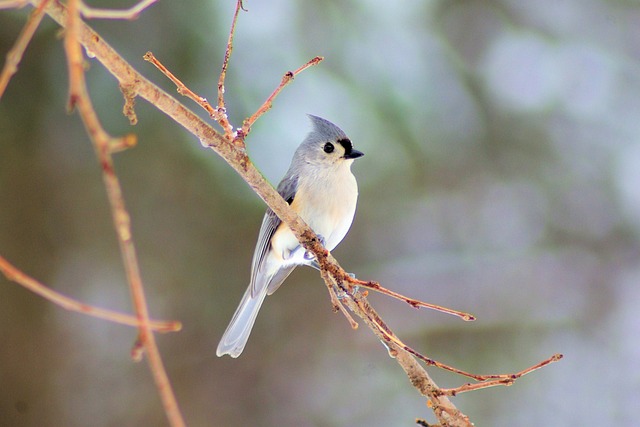
They’ve got a recognizable high-pitched song which kind of sounds like “peter-peter-peter”. These cute little birds are year-round residents found in residential, parks and wooded areas. A varied diet includes various insects, caterpillars, spiders, nuts & seeds. They often will fly in, grab a seed and move to the bark of a tree to wedge in the seed and tap their beak to crack it open.
Little birds like the Titmice will seek out holes in trees, old woodpecker holes & birdhouses to nest in. Many of their nests are found to include animal hair. Two other cousins include a Black-crested Titmouse, which is found in the Texas and Mexico areas, while the southwest finds the Brindled Titmouse. These small feathered friends, as well as the Chick-a-dees, belong to the Paridae family.
Last, but not least, is another cutie we’re lucky to have in our backyards, the Nuthatch. This little guy is fun to watch as he travels along down trees headfirst, complete opposite of other birds who travel upwards on trees. They also move in jerky upward and sideways motions. Hunting insects among the bark of trees with its narrow- pointed beak it is also known for wedging small seeds in bark to hammer or “hatch” open. Nuthatches sometimes will stash food for later in bark crevices.
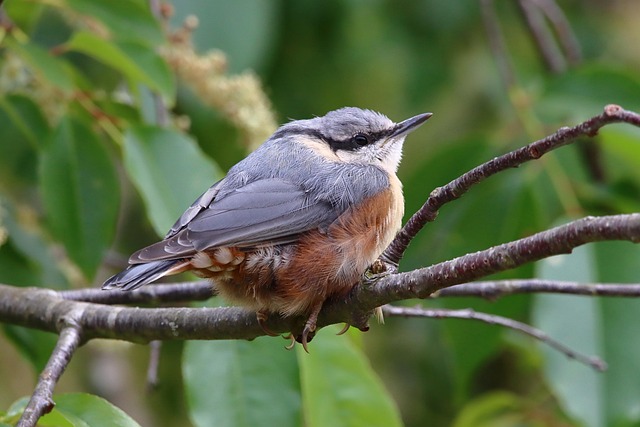
There are actually four species of Nuthatches, the most common for us Jersians being the White Breasted showing black caps, an almost blue grey back and white face & belly. The other three are the Red-Breasted, with rusty belly, the Brown-headed, a pine forest dweller wearing a brown cap and the Pygmy Nuthatches, smallest of the Nuthatches also with brown cap, a blue grey back and more greyish belly. All sport dapper black caps, rusty bellies & white cheeks, and are regular feeder customers choosing wooded areas and
forests as home. Again, these beaks are designed for insect, small nut and seed dining.
Their heads almost seem a bit large for their small bodies and short tails. All are cavity nesters seeking older woodpecker tree holes as well as mother nature’s holes.
If making a birdhouse for one of these wonderful creatures, the entrance hole size is key. Many enemies can snatch eggs & young, or, if found by a Cowbird, an egg may appear as a deposit which goes undetected. Once hatched, a clear, unusual size difference is seen!
Keep holes to:
Chick-a-dee 1 1/8 in.
Nuthatch 1 1/4 in.
Wren 1 in – 1 1/8
Titmouse 1”
Birdhouses or nestboxes can be bought in stores or online, however, they are simple & cheap to build.
Using a 1 X 6 X 5 pine or cedar plank: Cut the plank into 6 pieces. This will give the base, roof, back, 2 sides and front. On the front piece, cut a 1 1/8in. hole using a hole bit about 6” from the base. Using galvanized screws for non-rusting attaching sides to the back, next add floor and front.
HINT: Make either the roof or a side panel able to open for cleaning by attaching with just 2 screws at the top. This allows it to lift. *Never add a perch to deter enemies. Nest boxes should be about 5-10 ft from the ground, hanging from a limb, ideally in a shady spot.
Never face the box into the wind; face the entrance away from the wind. I’ve got one on a post which worked for 2 years with Nuthatch tenants, until squirrels decided to climb the post and nosed around slightly enlarging the entrance hole. Sadly, the tenants moved away.
Although some Chick-a-dees prefer higher. This year we are making a couple new boxes and will be using an old license plate bent in center for a roof. *(source for box dimensions: Empress of Dirt)