

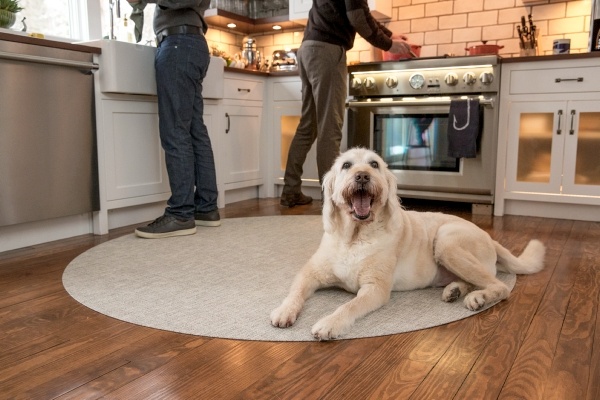
Thanksgiving is a time to share with friends and loved ones, so it’s understandable to let your family pet sample the feast. But we recommend resisting the urge to feed him Thanksgiving scraps—in his bowl or under the table.
Holiday spreads tend to be excessively rich, buttery, and oily, and dogs don’t respond well to fatty food, such as turkey skin, stuffing and gravies. The same goes for glazed ham, prime rib, and roast chicken. According to the Food and Drug Administration, eating rich foods could cause vomiting and diarrhea and can put your dog at risk of a dangerous condition known as pancreatitis. Symptoms of pancreatitis in dogs include a hunched back, vomiting, diarrhea, weakness, fever, visible abdominal discomfort or bloating, and restlessness. If your dog exhibits more than one of these symptoms, call your veterinarian immediately.
Turkey bones are not safe for dogs to eat. When whole, they can get stuck in his esophagus or trachea and cause life-threatening choking. Turkey bones break easily into smaller shards that can puncture your dog’s mouth, stomach and intestines, and lead to infections. These fragments can also get stuck and cause dangerous gastrointestinal blockages. Additionally, stuffing, mashed potatoes and other typical holiday side dishes often contain onions, garlic, scallions, leeks or shallots, which are dangerous for dogs to eat.
To keep your dog safe this holiday season, put the leftovers into the fridge, and toss the scraps and turkey bones into a sturdy enclosed container. If your kitchen garbage can isn’t completely secure from prying pets, put the scraps outside in an animal-proof garbage can.