


The Black Swan
April 12, 1926
There were many stories going back some 3 years. Fishermen, the Coast Guard, and Rum Runners all claimed to have seen her on the ocean and in the bays at night. A large black vessel, low to the water with no running lights. At first glance, the difference was her speed, and the earsplitting roar of her engines sounded like a squadron of military planes tearing across the water at sea level.
CG-113 had been hunting for rum runners by tracking the smuggling mothership Clemencia through the evening of April 11. Clemencia, a wooden, two-masted schooner from St. John’s, Newfoundland, had been sitting completely exposed 90 miles off Barnegat Light (NJ) when the Coast Guard ambushed her.
Boatswain Christopher C. Cole, in command of CG-113, was just about to give the order to take the Clemencia when his lookout nudged him and said, “What do you make of that?” Out of the darkness came a black shape, low to the water and with no running lights. It made a low, throaty rumble as it crept closer. CG-113 snapped into action. They pounced on the intruder vessel; Cole hailed her and ordered her to come alongside.
He personally stepped up to the rail, reaching out to grasp the Atalanta’s life rail to steady the two shifting vessels while his crew prepared a protective fender and a mooring line.
As Cole leaned over to secure the boat, the master of the Atalanta unexpectedly lunged forward and delivered a violent, stinging blow to the face, knocking the Boatswain flat backward onto the deck of CG- 113. The pirate vessel’s triple aircraft motors roared to life to make their high- speed escape; Cole remarkably shook off the assault. He scrambled back to his feet, ran straight to the CG-113’s Hotchkiss 1-pounder rapid-fire deck gun, and opened fire on the fleeing speedboat, commanding his men into an intense 90-minute gun battle. Cole and his men could hear the pinging sound and saw their shells bounce off the speeding vessel. “She has to be doing 30 miles an hour!” a young crewman told the veteran Cole.
Just then, the speedboat accelerated and vanished into the darkness. CG-113 did come away with one thing. The name on her stern said “ATALANTA”. “What kind of name is that?” The young man asked Cole. “It’s from Greek Mythology. The beautiful Atalanta agreed to marry only if a suitor could outrun her in a footrace, which swift-footed Atalanta knew was impossible. If the suitor was unsuccessful, he would be killed.” Cole paused. He was about to go to war with an educated man whose vessel was built for war.

ATALANTA
Atalanta was a custom-engineered masterpiece of Prohibition-era maritime architecture, designed explicitly as a high-capacity, armored rum-running vessel capable of withstanding heavy federal gunfire. Stretching an imposing 71 feet in overall length, this massive capital cruiser was structurally reinforced with extensive boilerplate steel armor plating layered directly into her wooden hull, bringing her total weight to an unprecedented 39 gross tons. To offset this staggering armored weight and maintain superior velocity on the open ocean, the vessel was configured with a high-performance triple-screw propulsion system.
She was powered by three heavy-duty marine engines supplied directly by the Standard Motor Construction Company in Jersey City, generating immense horsepower that allowed the ship to safely clock speeds of 35 to 40 miles per hour—a velocity that far exceeded any legitimate maritime requirement of the 1920s. Visually, she operated as a low-profile, blacked- out ghost ship with a sleek cabin structure designed to blend into the coastal fog. Her expansive interior hold was meticulously optimized for cargo capacity rather than luxury, capable of securely packing away over 400 heavy burlap sacks of contraband liquor during a single high-speed transit from the offshore motherships of Rum Row to the shallow rivers and coves of Sandy Hook and Raritan Bay.
Though she was legally registered to Ralph Bitter of the nearby Atlantic Highlands, her construction took place within the secretive, mob- controlled boatyards of Perth Amboy. This strategic location in Middlesex County sat right on the Raritan River and Arthur Kill, providing the shipyard with direct, easy access to both the New York Harbor and the open Atlantic shipping lanes where the rum-running fleet operated. Because the vessel was engineered without standard legal maritime registration papers to hide her illicit purpose, the specific shipyard name
was left off official manifests. However, she was built right in the backyard of Bitter’s criminal syndicate, allowing him to personally oversee her unique armored design and the installation of his factory’s heavy-duty engines.
RALPH BITTER
Ralph Bitter operated as the brilliant industrial mastermind and financial architect of the Atalanta, serving as a high-ranking lieutenant within Al Lilliens ’ multi-million-dollar regional smuggling syndicate. Rather than risking himself on the dangerous waters of the Jersey Shore, Bitter lived a double life, seamlessly pivoting between a legitimate career as a mechanical engineer and a premier underworld coordinator for Lilliens’ massive coastal enterprise. He utilized his financial ownership stake in Jersey City’s Standard Motor Construction Company to establish a secure, in-house supply chain for the organization, quietly diverting heavy-duty, high-performance marine power plants straight into Lilliens smuggling fleet.
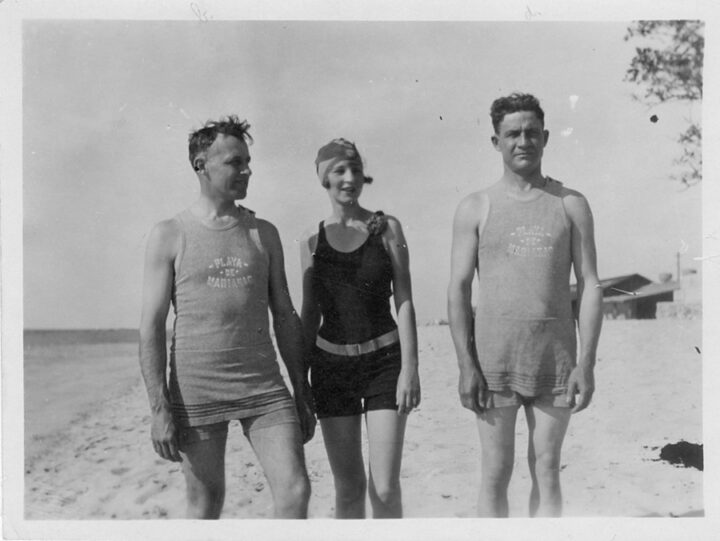
Bitters deep technical expertise allowed him to perfectly calculate the weight-to-horsepower ratio required to wrap the Atalanta’s 71-foot hull in 39 tons of boilerplate steel armor without sacrificing its blistering 40 mph escape speed. By acting as the legal owner of record for these custom-built pirate fortresses, Bitter effectively insulated kingpin Al Lilliens and top-tier bosses from prosecution while utilizing high-priced legal teams to reclaim seized vessels through maritime loopholes. Whether ordering his men to completely strip the steel plating off a compromised boat to evade federal piracy charges or managing the vast logistics of Lilliens Sandy Hook rum-running lines, Bitters unique convergence of industrial infrastructure and tactical cunning made him one of the most elusive and vital assets in the Lillien syndicate.
CAPTURED
The legendary end of the Atalanta’s high-speed run occurred on October 8, 1926, when a specialized U.S. Coast Guard Destroyer Task Force orchestrated a flawless tactical ambush. Operating far out in international waters along the infamous offshore “Rum Row”, the 71-foot armored speedboat was caught by surprise while idling completely stationary alongside the British supply schooner Julito, transferring a massive payload of 418 burlap sacks of contraband liquor. Slipping silently out of the heavy Atlantic fog, the USCGC Ericsson—a towering, 240-foot converted naval destroyer bristling with heavy artillery—effectively pinned the Atalanta against the massive wooden hull of the mothership. Trapped at close range under the destroyer’s primary deck guns, the bootlegger captain realized that gunning his triple-screw aircraft engines would either destroy his own vessel or cause it to be instantly shredded by a barrage of military shells.

Recognizing that his boilerplate steel armor could not survive a direct hit from destroyer-grade artillery, the master surrendered the vessel, allowing armed federal boarding parties to swarm the deck and arrest the five-man crew without a single shot being fired. What followed the physical capture became one of the most brilliant and controversial legal maneuvers of the Prohibition era. Recognizing that Ralph Bitter and the powerful Al Lillien syndicate wielded immense local political influence, Coast Guard Intelligence chief Commander Charles S. Root ordered the captured crew to be held entirely incommunicado at the Coast Guard Station in New London, Connecticut. By deliberately hiding the prisoners from their own high-priced mob lawyers, the federal government successfully prevented the syndicate from securing a friendly New Jersey judge to grant them immediate bail.
While the defense team frantically scrambled to locate their clients, federal prosecutors bypassed a standard criminal jury trial entirely and launched an administrative maritime libel for forfeiture against the physical vessel itself. Utilizing strict customs laws regarding ships fleeing inspection and lurking near foreign smuggling craft, the U.S. District Court permanently confiscated the 39-ton vessel, effectively transforming the New Jersey underworld’s prized pirate fortress into a government picket boat used to hunt down its former peers. The Pirate became the pirate hunter.
AFTERMATH
When the Atalanta was permanently seized in October 1926, the federal government deliberately avoided trying to bring criminal charges directly against Bitter or the syndicate bosses. Coast Guard Intelligence chief Commander Charles S. Root knew that proving a direct, criminal paper trail from an armored boat in international waters to an executive sitting in a Jersey City engine plant was a monumental task. Instead, the government utilized an administrative maritime strategy called libel for forfeiture. Because they sued the physical boat for customs violations rather than the owners, Atalanta was legally taken away and drafted into the Coast Guard fleet. The former pirate now hunted pirates.
Ultimately, while the federal government successfully stripped Ralph Bitter of his prized armored boats and mechanical masterpieces, the “brilliant industrial mastermind” of the Jersey Shore never served a single day in prison for building them.
Cover Photo: U.S. Naval Institute
To learn more about Atlantic Highlands and the Bay Shore during Prohibition, join Jack Grodeska and the Atlantic Highlands America 250 Committee for a Repeal Day walking tour of historic Prohibition sites and stories around town. To register for this free event, CLICK HERE