There have been no fewer than 18 different lighthouse keepers at Sandy Hook Lighthouse during the 19th and 20th centuries, in addition to the first keepers who served in the 1700s. But there has only been one official and paid woman keeper, and that was Sarah Johnson, half of the brother-sister team that manned the lights protecting New York Harbor from 1867 to 1885. But Sarah stayed on after retiring from that difficult job and remained active at Sandy Hook until 1898. 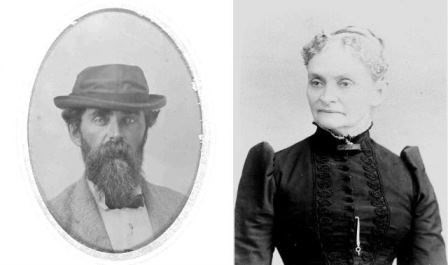
Charles W. Patterson took over the main light-keeping position from Uriah Smalley in 1861 and his sister Sarah was hired as an assistant six years later. Two years after that, Samuel P. Jewell also became a second assistant, working alongside Sarah.
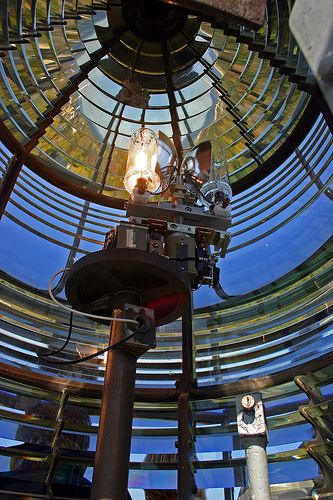
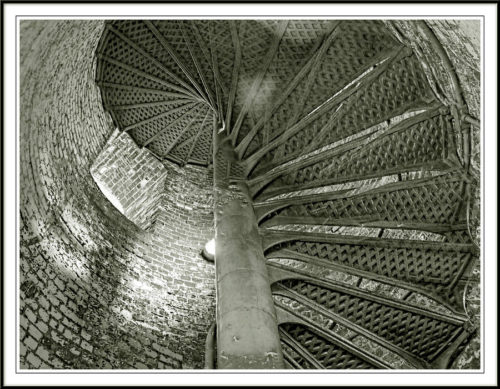
There was no doubt assistant lightkeepers were essential, since maintaining the beacon required a lot of work, time and care. It was important to keep a bright light regardless of the weather; the light was fueled with kerosene oil to keep the Fresnel lens bright, and the oil had to be carried up the stairs to the light….all 108 steps from the base to the top.
Sarah was born Feb. 29, 1832, married James Johnson in 1856 and had two children, both of whom died in infancy, and she was widowed not long after, later taking on the position of lighthouse keeper. Records show she was paid $360 annually for her post.
During his years as keeper, Sarah’s brother Charles lived at the light with his wife, W. Anker Patterson, and their four children, sons Trevonian, Franklin, and Edwin, and a daughter, Mary. His first keepers during his 24-year tenure were Frank and Austin Patterson. Charles resigned in 1885 due to Bright’s disease, so Sarah left her position as well, but remained on the Hook teaching the children of the soldiers at the relatively new Providing Ground. Mr. Jewell was promoted to become the lighthouse keeper, remaining for a total of 40 years, the longest of any of those keepers in the Sandy Hook service.
Sarah remained at Sandy Hook after leaving the lighthouse until all civilians were ordered off the base because of the Spanish-American War. She then retired to her hometown of Howell, where she died in 1909. Charles’ daughter Mary grew up and served 30 years with the US Life-Saving Service, Station Number 1, located at Sandy Hook, continuing a long-time family service to the sea.
Sarah lived through some interesting times on the peninsula. She saw the Sandy Hook Proving Ground officially established in 1874, was on the Hook in 1894 when the lights were first electrified, thanks to help from the Gedley Channel buoys which were electrically powered. She was still there in 1903 when the power was switched back to kerosene gas because the buoys were converted to gas. It was the same year a mortar exploded at the proving ground and 15 tons of metal poured down all over Sandy Hook.
Electricity was not returned to the lighthouse until 1925 and in 1941, the Sandy Hook Lighthouse came under the jurisdiction of the US Coast Guard.
Sarah Johnson died in 1909 and is buried at the cemetery of the Ardena Baptist Church, where she had been a lifelong member.
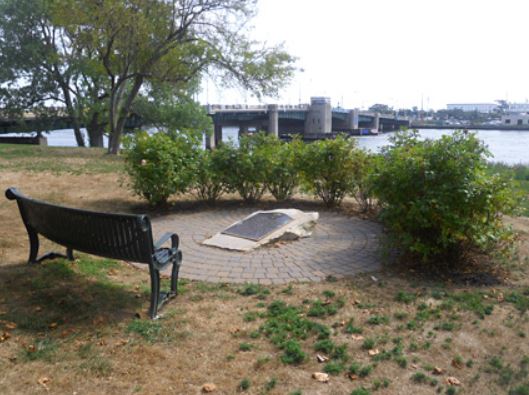
A plaque honoring Lighthouse keeper Johnson is situated at Sandy Hook near the lighthouse.
]]>
It all started in 1764 when the 103-foot-high white lighthouse was built on Sandy Hook, now part of Gateway National Recreation Area in Highlands. It was one of only 11 lighthouses in the original 13 colonies and today remains the oldest still operating lighthouse in the country. Although the building is maintained by the National Park Service, the light itself is under the direction of the Coast Guard and the light remains a beacon for ships entering and leaving New York Harbor. The lighthouse closed for visitors in September for intense repairs, rehabilitation and renovations, all of which is expected to be completed by April of 2018. During renovation, the adjacent Visitor Center and gift shop remain open.

A few miles away, across the Shrewsbury River and situated on one of the highest points along the East Coast waterways, is the Twin Lights, once the brightest beacon on the East Coast with its Fresnel lens, and itself a historic landmark for a variety of reasons. It is the site where the Pledge of Allegiance was officially first said publicly; it is also the site where Guglielmo Marconi sent his first wireless message, and eventually became the first lighthouse electrically powered. In the 1930s, the Army’s Mystery Ray, what we now know as radar, was tested at the site. Officially known as the Navesink Light Station, the two lights separated by keeper’s quarters were designed to avoid confusion for seamen with the Sandy Hook Light and are not identical twins because of the differences in their shape and operation. Maintained by the State of New Jersey, and home to both the Friends of the Twin Lights and the Highlands Historical Society, the Twin Lights are open for visiting and climbing several days a week, and house a magnificent maritime collection in the Museum located between the towers.
Barnegat Lighthouse, Old Barney to friends, at 171 feet in height, joins the Absecon Lighthouse as being the two tallest lighthouses in the state. Located on the north end of Long Beach Island, Old Barney’s striking red and white exterior is a familiar sight for summer visitors. The lighthouse was built in 1859 on what has been identified as one of the most crucial change of course points for ships, with swift currents, shifting sandbars and shoals extending from the shore offering unique and dangerous challenges for sea vessels along the New Jersey coastline. The Lighthouse is on the NJ Coastal Heritage Trail.

In addition to Sandy Hook the Twin Lights, and Barnegat lighthouses, visitors seeking to discover the uniqueness of the structures can visit the Absecon Lighthouse, the 157-foot-high Cape May lighthouse, as well as Hereford in Wildwood, Sea Girt, decommissioned since 1945 but a charming Victorian building constructed in 1896 and boasting a square red brick tower;

Tucker’s Island, a reconstructed lighthouse built about six miles from the original building, East Point in Heislerville on Delaware Bay, a two story white building with a bright red roof, Finns Point Rear Range, an 1876 wrought iron structure in Pennsville, built in Buffalo and moved to its site by rail and wagon, and Tinicum Rear Range Lighthouse in Paulsboro, built in connection with Tinicum Front Range Light to guide ships along the Delaware River to ports in Philadelphia and Camden.
https://www.visitnj.org/nj-attractions/sandy-hook-lighthouse
]]>
It all started in 1764 when the 103-foot-high white lighthouse was built on Sandy Hook, now part of Gateway National Recreation Area in Highlands. It was one of only 11 lighthouses in the original 13 colonies and today remains the oldest still operating lighthouse in the country. Although the building is maintained by the National Park Service, the light itself is under the direction of the Coast Guard and the light remains a beacon for ships entering and leaving New York Harbor. The lighthouse closed for visitors in September for intense repairs, rehabilitation and renovations, all of which is expected to be completed by April of 2018. During renovation, the adjacent Visitor Center and gift shop remain open.
A few miles away, across the Shrewsbury River and situated on one of the highest points along the East Coast waterways, is the Twin Lights, once the brightest beacon on the East Coast with its Fresnel lens, and itself a historic landmark for a variety of reasons. It is the site where the Pledge of Allegiance was officially first said publicly; it is also the site where Guglielmo Marconi sent his first wireless message, and eventually became the first lighthouse electrically powered. In the 1930s, the Army’s Mystery Ray, what we now know as radar, was tested at the site. Officially known as the Navesink Light Station, the two lights separated by keeper’s quarters, were designed to avoid confusion for seamen with the Sandy Hook Light and are not identical twins because of the differences in their shape and operation. Maintained by the State of New Jersey, and home to both the Friends of the Twin Lights and the Highlands Historical Society, the Twin Lights are open for visiting and climbing several days a week, and house a magnificent maritime collection in the Museum located between the towers.
Barnegat Lighthouse, Old Barney to friends, at 171 feet in height, joins the Absecon lighthouse as being the two tallest lighthouses in the state. Located on the north end of Long Beach Island, Old Barney’s striking red and white exterior is a familiar sight for summer visitors. The lighthouse was built in 1859 on what has been identified as one of the most crucial change of course points for ships, with swift currents, shifting sandbars and shoals extending from the shore offering unique and dangerous challenges for sea vessels along the New Jersey coastline. The Lighthouse is on the NJ Coastal Heritage Trail.
In addition to Sandy Hook the Twin Lights, and Barnegat lighthouses, visitors seeking to discover the uniqueness of the structures can visit the Absecon Lighthouse, the 157 foot high Cape May lighthouse, as well as Hereford in Wildwood, Sea Girt, decommissioned since 1945 but a charming Victorian building constructed in 1896 and boasting a square red brick tower.
Tucker’s Island, a reconstructed lighthouse built about six miles from the original building, East Point in Heislerville on Delaware Bay, a two story white building with a bright red roof, Finns Point Rear Range, an 1876 wrought iron structure in Pennsville, built in Buffalo and moved to its site by rail and wagon, and Tinicum Rear Range Lighthouse in Paulsboro, built in connection with Tinicum Front Range Light to guide ships along the Delaware River to ports in Philadelphia and Camden.
https://www.visitnj.org/nj-attractions/sandy-hook-lighthouse
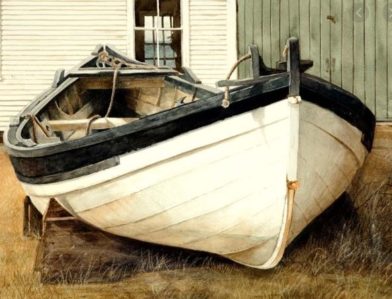
]]>It was October 5, 1781. The privateer sloop Revenge ghosted along Raritan Bay in total darkness, making barely a ripple on the water. With all running lights extinguished, her black hull made her nearly invisible. Her Master was well versed at navigating the bays and rivers. Captain Adam Hyler needed no lights to guide his ship. Trailing on a towline behind the Revenge were two 36ft whaleboats.
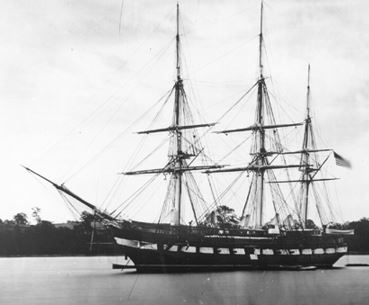
Hours earlier, a patriot courier had rushed into William Mariner’s tavern in New Brunswick and told Hyler that a convoy of potential prizes had anchored in Horseshoe Cove at Sandy Hook, under the protection, not only of the log fort’s swivel cannons, but a massive, 200ft British man of war, with 100 cannons spread across three tiers.
Adam knew what he was in for. As a young man, he had been pressed into service by the British Royal Navy, after which he became a ship’s captain with his own merchant shipping company. A life at sea made Hyler acutely aware of the awesome power of a British man of war.
Adam Hyler was born in Baden, Germany in 1735 and came to NJ with his family in 1752. By the time of the Revolutionary War, Hyler was in his 40’s and a well-respected businessman in New Brunswick. When war broke out, Adam joined forces with Captain William Mariner as second in command of Mariner’s privateer forces. After Mariner’s forced retirement, Hyler took over and his exploits became legend. The New Jersey Gazette reported his multiple, daring raids on the British stronghold at Sandy Hook. Headlines screamed his name.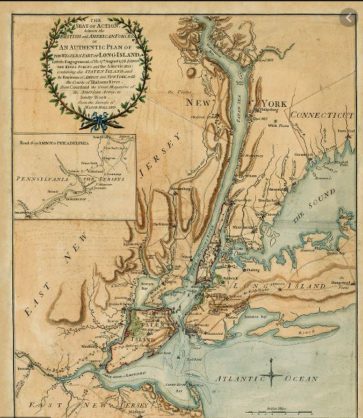
As the Revenge slipped into Sandy Hook Bay, Hyler could see his quarry. Sitting at anchor in Horseshoe Cove (Called Horseshoe Bay in 1781) were five prize ships. Three of the vessels were merchantmen, but the other two were armed Tory privateers. The smaller, a sloop, mounted a three-pounder cannon and six swivels; the larger carried four six-pounders, two on each side. They were more than a match for the Revenge and her whaleboats. Ashore, the raiding party faced the twelve swivel cannons mounted on the British Log Redoubt at the base of the Sandy Hook lighthouse, not a half-mile away on the beach.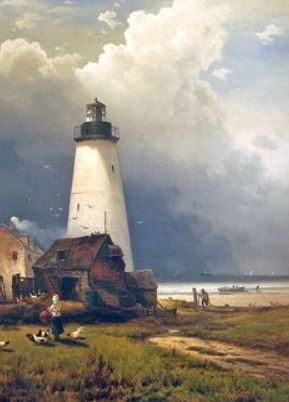
Hyler gave orders to have the whaleboats reconnoiter the prizes. His men slipped silently into their boats and rowed to their targets in total darkness. An old hand at naval battles, Adam had the oar handles and tholepins wrapped in leather to avoid any noise while rowing. His men, hand-picked because they showed no fear in battle, were like wraiths. Adam waited.
They returned to report that the merchant vessels were unmanned, and the Tory privateer’s night watch was haphazard at best. Hyler whispered to his second in command, “Battle Stations.” The whaleboats and the Revenge swooped down on their targets. The Revenge taking the larger privateer, while one of the whaleboats took the small privateer and the other began stripping the merchant vessels of all that was valuable. 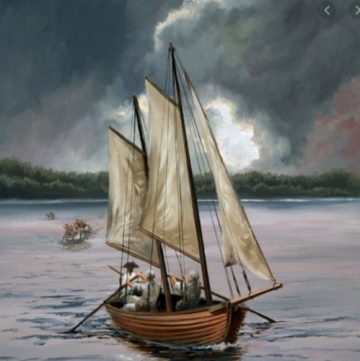
Hyler was the first onboard the Tory privateer, followed by his men. Their footfalls aroused the Tory crew. Only a few made it out from below deck as Hyler’s men guarded the door with cutlasses drawn. The Tories on deck decided to abandon ship rather than fight, they guessed the identity of their assailants. Hyler and his men stripped the vessel of valuable gunpowder and arms and set her ablaze. Their last act was to release the Tory crew. His whaleboats did likewise to all but one merchant vessel, where a woman and her children were found hiding in their cabin.
The fires aroused the British dreadnought. Shouts could be heard as guns were run out and cannons began to fire into the darkness. Hyler kept the Revenge behind the burning vessels, allowing no shadow or profile, so the Man of War had no target that night. Some say that the Revenge with her whaleboats in tow, slipped into the night and back to her homeport in New Brunswick.
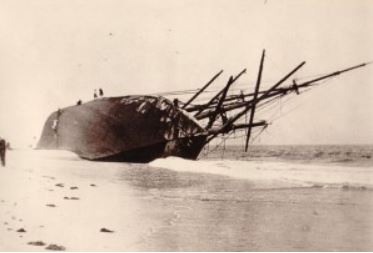
But another story tells us that Hyler took personal command of one of the whaleboats and silently slipped under the bow of the great warship as it continued withering fire at an invisible target. Once in position, Adam cut the ships anchor line so that the massive vessel was adrift, inching ever closer to shore with each volley of her guns, ending any chance that she could pursue the Revenge.
Hyler went on to harass British shipping for another year after this raid. He humiliated the British Navy and faced multiple assassination attempts by British forces. On May 25, 1782, he attacked and defeated a group of 25 British marines in a combined Naval and Land action, referred to as the Battle of the Shrewsbury River (fought either in Monmouth Beach or Rumson, NJ). Adam was severely wounded during the fight. Despite a wound that would not heal, Hyler went on to continue raiding and fighting against British forces until he died of his wounds several months later.
It was April 15, 1908. Private Lander Radford was on duty in building No. 32 at Fort Hancock, Sandy Hook, NJ. It had been a normal day, full of the typical duties of a U.S. Army Private. That changed when a group of men barged through the door carrying large wooden boxes with a ghastly cargo of skeletal remains. Radford regained his composure to ask the men what had happened. They had been working near Horseshoe Cove, grading the new railroad bed when they came upon an obstruction. As they dug around it, they realized that it was a vault made of bricks and contained 14 bodies.

The remains that the workmen discovered on that sunny April day belonged to Lt. Hamilton Douglas Haliburton and 13 crew members of the 50-gun, Portland-class British Warship, HMS Assistance. Private Radford would later report: “We were told that 14 Bodies were found in a forgotten burial, so we were ordered to make 14 wooden boxes to hold each body. But the trouble was that all the bones were mixed together in the boxes brought to the storehouse. We couldn’t tell who was who, so when we made the boxes, we did our best to try and figure out if we had enough bones for each body, and then put them into each box.”

The remains were reinterred at Cypress Hills National Cemetery in Brooklyn, New York in 1909, and a large, granite monument was erected over their grave in 1939.
December 31, 1783, the American Revolutionary War was essentially over. The HMS Assistance lay at anchor in Horseshoe Cove at the British stronghold of Sandy Hook. It was cold and the sky was a deep grey with the smell of impending weather in the air. Earlier that day, a Midshipman and 6 crew members set off in a longboat to retrieve water from the nearby transport ship, HMS Bridgewater. The crewmen overpowered the Midshipman and pulled for the town of Portland Poynte.
Captain William Bentinck had a problem. The day prior, 5 seamen jumped ship and deserted. It was becoming an epidemic. Given that the Assistance had a complement of 350, he could not afford desertions. His reputation and career were at stake. After some deliberation, he summoned 20-year-old Lieutenant Hamilton Douglas Halyburton and gave him orders to select a contingent of officers and chase down the deserters. Halyburton, a 7-year Naval veteran and member of the peerage, was a rising star in the Royal Navy. Bold, dynamic and eager to make a name and career for himself, he was the perfect choice to lead the mission.
Hamilton chose thirteen men, 12 officers and a seaman, for the duty. They boarded the ship’s barge as the grey sky darkened and a breeze began to stir. They set off to find the latest group of deserters.
Later that night, the breeze blew into a full-on gale with a heavy snowfall. Captain Bentinick began to be concerned as the weather continually worsened. He hoped that Halyburton and his men had made it to shore before the blizzard began.
The blizzard and gale-force winds continued all the next day. On January 2, 1784, the barge and frozen bodies of Hamilton Douglas Halyburton and his 13 men (James Champion Lieutenant of Marines, Alexander Johnstone, George Paddy, Robert Haywood, Midshipmen, Charles Gascoigne, William Tomlinson, Andrew Hamilton, William Spry, William Scott, John McChain, David Reddie, Robert Wood and George Towers common seaman) were discovered grounded on a mud bar, stuck fast. Had they landed 150 yards in either direction, there is a good chance they would have survived, as the barge would have been able to return to the ship.

Katherine Hamilton, the Countess Dowager of Morton, erected a marble monument over the grave of her son and his men at Sandy Hook.
In or about 1808, during the Napoleonic Wars, an armed French Corsair landed on Sandy Hook in search of water. Some of the crewmen took the time to destroy Halyburton’s monument.

In 1937, the Civilian Conservation Corps erected a new memorial, made of local peanut stone, over the site of the grave near Horseshoe Cove. A bronze plaque relates the story of the HMS Assistance tragedy.
The Assistance ended her naval career wrecked on a sandbar off Dunkirk in 1802.
https://nyharborparks.org/visit-parks/#tab-id-23
]]>
This is at the tail end of Horseshoe Crab Season and we may still be able to find about some of our oldest friends, 445 million years old that is!!!
Watch your step as we walk along the sand and wade within the water as they will be crawling at your feet. Experience the excitement of holding one of these ancient creatures as the sun sets over the bay.
Wednesday, June 25th
6:30 p.m. – 8:00 p.m.
Meet at: B Lot Parking Area
Gateway National Recreation Area
Sandy Hook Unit
Highlands, NJ
$10 members/ $20 non-members
The remains that the workmen discovered on that sunny April day belonged to Lt. Hamilton Douglas Haliburton and 13 crew members of the 50-gun, Portland-class British Warship, HMS Assistance. Private Radford would later report: “We were told that 14 Bodies were found in a forgotten burial, so we were ordered to make 14 wooden boxes to hold each body. But the trouble was that all the bones were mixed together in the boxes brought to the storehouse. We couldn’t tell who was who, so when we made the boxes, we did our best to try and figure out if we had enough bones for each body, and then put them into each box.”
The remains were reinterred at Cypress Hills National Cemetery in Brooklyn, New York in 1909, and a large, granite monument was erected over their grave in 1939.
December 31, 1783, The American Revolutionary War was essentially over. The HMS Assistance lay at anchor in Horseshoe Cove at the British stronghold of Sandy Hook. It was cold and the sky was a deep grey with the smell of impending weather in the air. Earlier that day, a Midshipman and 6 crew members set off in a longboat to retrieve water from the nearby transport ship; HMS Bridgewater. The crewmen overpowered the Midshipman and pulled for the town of Portland Poynte.
Captain William Bentinck had a problem. The day prior, 5 seamen jumped ship and deserted. It was becoming an epidemic. Given that the Assistance had a compliment of 350, he could not afford desertions. His reputation and career were at stake. After some deliberation, he summoned, 20-year-old, Lieutenant Hamilton Douglas Halyburton and gave him orders to select a contingent of officers and chase down the deserters. Halyburton, a 7-year Naval veteran and member of the peerage, was a rising star in the Royal Navy. Bold, dynamic and eager to make a name and career for himself, he was the perfect choice to lead the mission.
Hamilton chose thirteen men, 12 officers and a seaman, for the duty. They boarded the ship’s barge as the grey sky darkened and a breeze began to stir. They set off to find the latest group of deserters.
Later that night, the breeze blew into a full-on gale with a heavy snowfall. Captain Bentinick began to be concerned as the weather continually worsened. He hoped that Halyburton and his men had made it to shore before the blizzard began.
The blizzard and gale-force winds continued all the next day. On January 2, 1784, the barge and frozen bodies of Hamilton Douglas Halyburton and his 13 men (James Champion Lieutenant of Marines, Alexander Johnstone, George Paddy, Robert Haywood, Midshipmen, Charles Gascoigne, William Tomlinson, Andrew Hamilton, William Spry, William Scott, John McChain, David Reddie, Robert Wood and George Towers common seaman) were discovered grounded on a mud bar, stuck fast. Had they landed 150 yards in either direction, there is a good chance they would have survived, as the barge would have been able to return to the ship.
Katherine Hamilton, the Countess Dowager of Morton erected a marble monument over the grave of her son and his men at Sandy Hook.
In or about 1808, during the Napoleonic Wars, an armed French Corsair landed on Sandy Hook in search of water. Some of the crewmen took the time to destroy Halyburton’s monument.
In 1937, Civilian Conservation Corps erected a new memorial, made of local peanut stone, over the site of the grave near Horseshoe Cove. A bronze plaque relates the story of the HMS Assistance tragedy.
The Assistance ended her naval career wrecked on a sand bar off Dunkirk in 1802.
https://nyharborparks.org/visit-parks/#tab-id-23
]]>
It all started in 1764 when the 103-foot-high white lighthouse was built on Sandy Hook, now part of Gateway National Recreation Area in Highlands. It was one of only 11 lighthouses in the original 13 colonies and today remains the oldest still operating lighthouse in the country. Although the building is maintained by the National Park Service, the light itself is under the direction of the Coast Guard and the light remains a beacon for ships entering and leaving New York Harbor. The lighthouse closed for visitors in September for intense repairs, rehabilitation and renovations, all of which is expected to be completed by April of 2018. During renovation, the adjacent Visitor Center and gift shop remain open.
A few miles away, across the Shrewsbury River and situated on one of the highest points along the East Coast waterways, is the Twin Lights, once the brightest beacon on the East Coast with its Fresnel lens, and itself a historic landmark for a variety of reasons. It is the site where the Pledge of Allegiance was officially first said publicly; it is also the site where Guglielmo Marconi sent his first wireless message, and eventually became the first lighthouse electrically powered. In the 1930s, the Army’s Mystery Ray, what we now know as radar, was tested at the site. Officially known as the Navesink Light Station, the two lights separated by keeper’s quarters, were designed to avoid confusion for seamen with the Sandy Hook Light and are not identical twins because of the differences in their shape and operation. Maintained by the State of New Jersey, and home to both the Friends of the Twin Lights and the Highlands Historical Society, the Twin Lights are open for visiting and climbing several days a week, and house a magnificent maritime collection in the Museum located between the towers.
Barnegat Lighthouse, Old Barney to friends, at 171 feet in height, joins the Absecon lighthouse as being the two tallest lighthouses in the state. Located on the north end of Long Beach Island, Old Barney’s striking red and white exterior is a familiar sight for summer visitors. The lighthouse was built in 1859 on what has been identified as one of the most crucial change of course points for ships, with swift currents, shifting sandbars and shoals extending from the shore offering unique and dangerous challenges for sea vessels along the New Jersey coastline. The Lighthouse is on the NJ Coastal Heritage Trail.
In addition to Sandy Hook the Twin Lights, and Barnegat lighthouses, visitors seeking to discover the uniqueness of the structures can visit the Absecon Lighthouse, the 157 foot high Cape May lighthouse, as well as Hereford in Wildwood, Sea Girt, decommissioned since 1945 but a charming Victorian building constructed in 1896 and boasting a square red brick tower.
Tucker’s Island, a reconstructed lighthouse built about six miles from the original building, East Point in Heislerville on Delaware Bay, a two story white building with a bright red roof, Finns Point Rear Range, an 1876 wrought iron structure in Pennsville, built in Buffalo and moved to its site by rail and wagon, and Tinicum Rear Range Lighthouse in Paulsboro, built in connection with Tinicum Front Range Light to guide ships along the Delaware River to ports in Philadelphia and Camden.
https://www.visitnj.org/nj-attractions/sandy-hook-lighthouse
]]>In 1775, the British military offered to liberate slaves who escaped from their Patriot masters and joined British forces. The lure of freedom, and the opportunities presented by the chaos of the war, led about 10 percent of the total slave population in the 1770s to flee their Patriot masters. An estimated 100,000 African Americans escaped, died, or were killed during the American Revolution. British military camps were a magnet for slave refugees. Unsurprisingly, escaped slaves were most numerous in areas under direct control of the British Army or in close proximity to British military forces. Such was the situation at Sandy Hook, NJ.
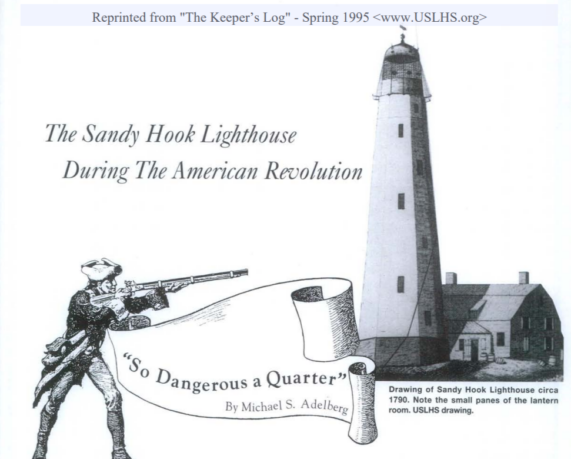
At the Sandy Hook British encampment, Escaped slaves and colonial loyalists formed what the British referred to as “Refugeetown” southeast, they say, of the Light House. It was here that the infamous Black Brigades were formed. These bands of escaped slaves and loyalists were sent out to plunder nearby towns and farms and to gather all of the information that they could about Patriot troop movements and future movements, then report back to the encampment at Sandy Hook. It was on one of these raids, June 10, 1779, that the notorious “Colonel Tye” and one hundred loyalists attacked, looted, and burned Tinton Falls to the ground, and captured five leading Patriots.
The lure of freedom has a very strong appeal. Sam was a slave on the Wooley farm. Upon hearing of the British military’s offers to free slaves who would fight for the crown, he began to dream of his freedom. But…what if he got caught? “Mr. Wooley wasn’t mean, but he would sure be angry. What would happen to him if he got caught?” Sam thought. Finally, after much deliberation, Sam took the chance and fled the Woolley farm. He knew where he was going…to Refugeetown on Sandy Hook, and freedom.
Freedoms just another word…
It was a long trip from what is now Ocean Township to Sandy Hook on foot. Sam had to move by night to make sure nobody spotted him. Every strange sound, every rustling leaf set his heart beating faster and his breath to catch in his through. He was getting closer to Sandy Hook, and he couldn’t let himself get caught now, he had come too far. So, Sam kept moving, hunger growing in his belly and thirst drying his throat. But he kept going until he finally was at the Shrewsbury River. By 1780, Highlands, NJ, and the entire Bay Shore were Patriot strongholds. Sam had to be careful as he sought to cross the river to Sandy Hook.
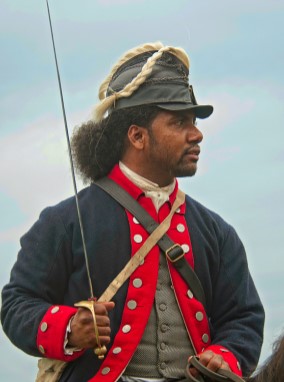
He arrived at the British encampment around noon of the next day. He was taken to Refugeetown, really more of a tent city rather than a town, and given food and water. The next day he started training in how to use a musket and sword. The first time he fired he must have been startled by the noise, as a gun was not something that he would have known much about.
Death of a Legend
After several days, they were all ushered to the yard by the Lighthouse. One of the Regular British Army Officers addressed the crowd announcing that “Titus”, known by the refugees and Black Milita as Colonel Tye, was dead. Tye had been a very successful and ruthless leader of raiding parties. Most of the British Officers said that Tye was the best of the Black Brigade leaders.
However, nothing lasts forever. After dozens of raids, Tye and his band of raiders surrounded Patriot Joshua (Jack) Huddy’s tavern/home in Colts Neck. Aside from being the leader of a Patriot militia, Huddy stockpiled and supplied muskets and shot to the militia. So, when the surprise attack came, with the help of a woman of about twenty years of age, named Lucretia Emmons, Huddy was able to hold off his attackers with withering fire. Lucretia loaded muskets at lightning spreads and handed them off to Huddy, who accurately soaked the enemy with musket balls.
The fight was getting too expensive, and Tye could not afford to lose any more men. So, he ordered the Black Brigade to set fire to the house. Jack Huddy had no choice but to surrender. Lucretia Emmons was set free and Huddy, in manacles, was taken on a march to the Shrewsbury River, where they would board long boats and return to Refugeetown.
Unfortunately, as the Black Brigade and their prisoner launched their boats, they discovered that Huddy’s Patriots had caught up with them and were hitting them with unrelenting fire. Somehow, Jack managed to flip himself, while manacled, overboard and began swimming to the riverbank. As musket balls whizzed around him, he shouted expletives and kept trying to identify himself to his troops. Huddy reached the shore but was subsequently shot in the thigh by, apparently, his own men. He recovered quickly.
Colonel Tye wasn’t so lucky. He was wounded in the wrist. It became infected with tetanus, turned gangrenous, and a few days later he died. Sam paled at the news. If a great leader like Colonel Tye could get killed like that, so could Sam. However, he wasn’t fighting for revenge, or the British, or anything other than to gain his freedom. He would do whatever was necessary. When this was over, he would be a freedman.
Find the Cost of Freedom Buried in the Ground
The day came. Sam joined a group of other slaves, and they were given the order to raid towns heading south, to take everything and give nothing back. Above all else, they were to determine Patriot militia strengths and locations and they were to track their movements.
By this point, the Patriots were on edge due to the many lawless acts committed by the Black Brigades comprised of slaves and loyalists. Sam and the Brigade moved through what is modern-day Sea Bright and into Long Branch, plundering and fighting. They moved through Tinton Falls creating havoc and chaos in their wake, for the sake of their freedom. Ugly times can make desperate people do ugly things.
They were tired and used a circuitous route to head back toward Sandy Hook and Refugeetown. They had no way of knowing that they were not alone. Finally, they came upon a hill in West Long Branch, at what is now the Old First United Methodist Church (197 Locust Ave). It was here that they stopped to rest. It was quiet and peaceful. Sam must have thought about what he would do, and where he would go after he was free. He drifted off to sleep.
The small group of Patriots slowly crept up on the men of the Black Brigade, so quickly that they never stirred until it was too late. They had no chance to defend themselves as the Patriots bayonetted them all to death.
Later that day, some people who lived nearby found the corpses of the dead Brigade. It was gruesome. All that blood. But then, they saw movement. One man was still alive though gravely wounded. They took Sam to a nearby house. He had eleven bayonet wounds to his chest and hands (he had tried in vain to deflect the oncoming bayonets).
After a while, he told his rescuers that he came from the Woolley Farm. They returned him to the farm where the Woolley family nursed him back to health. He stayed on the Wooley Farm for the rest of his life, his body bearing the hideous scars from that awful day.
And that place where Sam’s comrade in arms perished… was referred to from then on as “Negro Hill”.
For more information about recent discoveries that help to clarify slavery in Monmouth
County, view: https://www.youtube.com/watch?v=IwYUk3jsGC8 and visit
https://www.monmouthhistory.org/ for more on the History of Monmouth County.
Do you have a historical story, legend, or mystery here at the Jersey Shore and Sandy
Hook Bay? If you do, I’d like to hear it.
Email your story to [email protected].
]]>
The remains that the workmen discovered on that sunny April day belonged to Lt. Hamilton Douglas Haliburton and 13 crew members of the 50-gun, Portland Class British Warship, HMS Assistance. Private Radford would later report: “We were told that 14 Bodies were found in a forgotten burial, so we were ordered to make 14 wooden boxes to hold each body. But the trouble was that all the bones were mixed together in the boxes brought to the storehouse. We couldn’t tell who was who, so when we made the boxes, we did our best to try and figure out if we had enough bones for each body, and then put them into each box.”
The remains were reinterred at Cypress Hills National Cemetery in Brooklyn, New York in 1909, and a large, granite monument was erected over their grave in 1939.
December 31, 1783, The American Revolutionary War was essentially over. The HMS Assistance lay at anchor in Horseshoe Cove at the British stronghold of Sandy Hook. It was cold and the sky was a deep grey with the smell of impending weather in the air. Earlier that day, a Midshipman and 6 crew members set off in a longboat to retrieve water from the nearby transport ship; HMS Bridgewater. The crewmen overpowered the Midshipman and pulled for the town of Portland Poynte.
Captain William Bentinck had a problem. The day prior, 5 seamen jumped ship and deserted. It was becoming an epidemic. Given that the Assistance had a compliment of 350, he could not afford desertions. His reputation and career were at stake. After some deliberation, he summoned, 20-year-old, Lieutenant Hamilton Douglas Halyburton and gave him orders to select a contingent of officers and chase down the deserters. Halyburton, a 7-year Naval veteran and member of the peerage, was a rising star in the Royal Navy. Bold, dynamic and eager to make a name and career for himself, he was the perfect choice to lead the mission.
Hamilton chose thirteen men, 12 officers and a seaman, for the duty. They boarded the ship’s barge as the grey sky darkened and a breeze began to stir. They set off to find the latest group of deserters.
Later that night, the breeze blew into a full-on gale with a heavy snowfall. Captain Bentinick began to be concerned as the weather continually worsened. He hoped that Halyburton and his men had made it to shore before the blizzard began.
The blizzard and gale-force winds continued all the next day. On January 2, 1784, the barge and frozen bodies of Hamilton Douglas Halyburton and his 13 men (James Champion Lieutenant of Marines, Alexander Johnstone, George Paddy, Robert Haywood, Midshipmen, Charles Gascoigne, William Tomlinson, Andrew Hamilton, William Spry, William Scott, John McChain, David Reddie, Robert Wood and George Towers common seaman) were discovered grounded on a mud bar, stuck fast. Had they landed 150 yards in either direction there is a good chance they would have survived, as the barge would have been able to return to the ship.
Katherine Hamilton, the Countess Dowager of Morton erected a marble monument over the grave of her son and his men at Sandy Hook.
In or about 1808, during the Napoleonic Wars, an armed French Corsair landed on Sandy Hook in search of water. Some of the crewmen took the time to destroy Halyburton’s monument.
In 1937, Civilian Conservation Corps erected a new memorial, made of local peanut stone, over the site of the grave near Horseshoe Cove. A bronze plaque relates the story of the HMS Assistance tragedy.
The Assistance ended her naval career wrecked on a sand bar off Dunkirk in 1802.
https://nyharborparks.org/visit-parks/#tab-id-23
]]>