Coronavirus Archives - Jersey Shore Scene https://jerseyshorescene.com/tag/coronavirus/ A collaborative website written by locals about the thriving lifestyle along the Jersey Shore Mon, 03 Aug 2026 00:51:35 +0000 en-US hourly 1 https://jerseyshorescene.com/wp-content/uploads/2018/10/logo-new.png Coronavirus Archives - Jersey Shore Scene https://jerseyshorescene.com/tag/coronavirus/ 32 32 170653212 How to Make Homemade Hand Sanitizer https://jerseyshorescene.com/how-to-make-homemade-hand-sanitizer-2/ Mon, 03 Aug 2026 00:51:35 +0000 https://jerseyshorescene.com/?p=23998

Some commercial hand sanitizer contains ingredients as scary as the germs they protect you from, so why not make your own hand sanitizer from ingredients you select? This is an excellent project for kids as well as adults since the project can be expanded to include a discussion about hygiene and disinfection. You’ll save money, protect yourself from germs, and can customize the scent of the hand sanitizer so it doesn’t smell medicinal.

The active ingredient in this hand sanitizer recipe is the alcohol, which needs to comprise at least 60% of the product in order to be an effective disinfectant. The recipe calls for 99% isopropyl alcohol (rubbing alcohol) or ethanol (grain alcohol, most commonly available at 90%-95%).

Please don’t use any other types of alcohol (e.g., methanol, butanol), as they are toxic. Also, if you use a product that contains a lower percentage of alcohol (e.g., 70% alcohol) then you need to increase the amount of alcohol in the recipe or it won’t be as effective.

In addition to adding fragrance to your hand sanitizer, the essential oil you choose may also help protect you against germs. For example, thyme and clove oil have antimicrobial properties. If you are using antimicrobial oils, only use a drop or two, since these oils tend to be very powerful and might irritate your skin. Other oils, such as lavender or chamomile, may help soothe your skin.

What You’ll Need
Equipment / Tools
  • Bowl and spoon
  • Funnel
  • Bottle with pump dispenser

Materials

  • 2/3 cup 99 percent rubbing alcohol (isopropyl alcohol) or ethanol
  • 1/3 cup aloe vera gel
  • 8 to 10 drops essential oil, optional

Simply mix the ingredients together and then use the funnel to pour them into the bottle. Screw the pump back onto the bottle and you’re ready to go.

]]>
23998
Bourbon Cough Syrup For Grownups https://jerseyshorescene.com/bourbon-cough-syrup-for-grownups-2/ Wed, 10 Jan 2024 11:00:33 +0000 https://jerseyshorescene.com/?p=19339 Chances are, you or someone you know will get sick and you will be looking for relief anywhere you can find it. I’ve been told that “science” says drinking in moderation—as in two cocktails a day—can boost the body’s immune system.

Instead of wasting your money wandering the aisles of your local pharmacy, trying every over-the-counter remedy you can get your hands on, head to your liquor store, grab a nice bottle of whiskey and make a hot toddy instead.

For decades people have used the hot toddy as a natural remedy for easing all those aches and pains associated with the common cold. It was assumed that it was one of those natural remedies, like chicken soup, that works because your brain thinks it works, not because there is actual science behind it. But as it turns out, a hot toddy is pretty great, from a scientific perspective, at soothing your cold.

Whiskey is a great decongestant — the alcohol dilates the blood vessels, making it easier for your mucus membranes to deal with the infection — and, combined with the herbal tea, a squeeze of honey, lemon, and the warm steam emanating from the drink, you have the perfect concoction for helping to clear up your cold symptoms. By the time you finish the drink, you won’t only be breathing a bit easier, but the alcohol will also start working its magic in the sleep department, making you just groggy enough so you can get some much-needed shuteye.

This “Bourbon Cough Syrup for Grownups” is a tasty whiskey cocktail that can make being sick a little more tolerable. It contains vitamin C-rich lemon juice, honey—a natural cough suppressant and decongestant—and, two shots of bourbon. The honey does most of the heavy lifting, but the pain-relieving properties of whiskey certainly won’t make you feel any worse.

With mixing instructions from The Kitchn, here’s the recipe:

BOURBON COUGH SYRUP FOR GROWNUPS

  • 2 ounces bourbon whiskey
  • 1/2 lemon, juiced (about 2 ounces)
  • 2 – 4 ounces water (optional)
  • 1 tablespoon honey

Mix the bourbon, lemon juice, and water (if using) in a tumbler or mug and heat in the microwave for about 45 seconds. (You can also do this on the stovetop in a little saucepan.) Take out and add the honey. Whisk to combine, then microwave for another 45 seconds.

Just be sure to stick to one of these cocktails per day and drink plenty of other fluids, as too much alcohol will dehydrate the body and lengthen the flu’s duration.

The reason most people rely on cold and flu drugs like Nyquil is that they not only ease our congestion, but they help us fall asleep. The ingredients in a hot toddy do the exact same thing. Sleep is the primary way your body can fight off a cold so that you’re well-rested.

You could use Nyquil, but a hot toddy works just as well at relieving your symptoms, and it works a bit more naturally, so you can sleep. One benefit of a hot toddy over Nyquil is the lack of that hazy Nyquil hangover many people often develop in the morning. Another benefit of whiskey is that the alcohol helps fight off infection and the growth of microorganisms.

Here’s a favorite easy, go-to hot toddy recipe:

  • 8 oz Hot Water

  • 1 Bag Herbal Tea

  • 1oz Bourbon

  • 1 Tablespoon Honey

  • 1 Lemon Wedge

Pour hot water into a mug and steep tea for 2-3 minutes. Remove the tea bag and add honey, stirring to dissolve. Pour in whiskey, add a squeeze of lemon, stir and find relief.

As with any remedy that incorporates booze as the main ingredient, there is such a thing as too many hot toddies if your goal is to feel better. While the alcohol in one drink is great for falling asleep and feeling refreshed, one too many and the sleep you receive won’t be that refreshing at all and could cause you to wake up the next morning feeling worse.
]]>
19339
Musicians Improvise Masks for Wind Instruments to Keep the Band Together https://jerseyshorescene.com/musicians-improvise-masks-for-wind-instruments-to-keep-the-band-together/ Sat, 17 Oct 2020 12:30:14 +0000 https://jerseyshorescene.com/?p=9307 Trombonist Jerrell Charleston loves the give-and-take of jazz, the creativity of riffing off other musicians. But as he looked toward his sophomore year at Indiana University, he feared that steps to avoid sharing the coronavirus would also keep students from sharing songs.

“Me and a lot of other cats were seriously considering taking a year off and practicing at home,” lamented the 19-year-old jazz studies major from Gary, Indiana.

musical-masks_

His worries evaporated when he arrived on campus and discovered that music professor Tom Walsh had invented a special mask with a hole and a protective flap to allow musicians to play while masked.

Students also got masks for the ends of their wind instruments, known as bell covers, allowing them to jam in person, albeit 6 feet apart.

“It’s amazing to play together,” Charleston said. “Music has always been my safe space. It’s what’s in your soul, and you’re sharing that with other people.”

Of course, the very act of making music powered by human breath involves blowing air — and possibly virus particles — across a room. One infamous choral practice in Washington state earlier this year led to confirmed diagnoses of COVID-19 in more than half of the 61 attendees. Two died.

musical-masks_

So musicians around the country are taking it upon themselves to reduce the risk of COVID-19 without silencing the music. With pantyhose, air filters, magnets, bolts of fabric and a fusion of creativity, those who play wind instruments or sing are improvising masks to keep the band together.

A consortium of performing arts groups has commissioned research exploring ways for musicians to play safely. The group’s preliminary report from July recommends instrumentalists wear masks with small slits, use bell covers, face the same direction while playing and stay 6 feet apart for most instruments — with a distance of 9 feet in front and back of trombonists. Other research has shown cotton bell covers on brass instruments reduced airborne particles by an average of 79% compared with playing without one.

https://khn.org/

]]>
9307
America’s Obesity Epidemic Threatens Effectiveness of Any COVID Vaccine https://jerseyshorescene.com/americas-obesity-epidemic-threatens-effectiveness-of-any-covid-vaccine/ Thu, 20 Aug 2020 20:00:18 +0000 https://jerseyshorescene.com/?p=8721 Content provided by Kaiser Health News ~

For a world crippled by the coronavirus, salvation hinges on a vaccine.

But in the United States, where at least 4.6 million people have been infected and nearly 155,000 have died, the promise of that vaccine is hampered by a vexing epidemic that long preceded COVID-19: obesity.

Scientists know that vaccines engineered to protect the public from influenza, hepatitis B, tetanus and rabies can be less effective in obese adults than in the general population, leaving them more vulnerable to infection and illness. There is little reason to believe, obesity researchers say, that COVID-19 vaccines will be any different.

“Will we have a COVID vaccine next year tailored to the obese? No way,” said Raz Shaikh, an associate professor of nutrition at the University of North Carolina-Chapel Hill.

“Will it still work in the obese? Our prediction is no.”

More than 107 million American adults are obese, and their ability to return safely to work, care for their families and resume daily life could be curtailed if the coronavirus vaccine delivers weak immunity for them.

In March, still early in the global pandemic, a little-noticed study from China found that heavier Chinese patients afflicted with COVID-19 were more likely to die than leaner ones, suggesting a perilous future awaited the U.S., whose population is among the heaviest in the world.

And then that future arrived.

As intensive care units in New York, New Jersey and elsewhere filled with patients, the federal Centers for Disease Control and Prevention warned that obese people with a body mass index of 40 or more — known as morbid obesity or about 100 pounds overweight — were among the groups at highest risk of becoming severely ill with COVID-19. About 9% of American adults are in that category.

As weeks passed and a clearer picture of who was being hospitalized came into focus, federal health officials expanded their warning to include people with a body mass index of 30 or more. That vastly expanded the ranks of those considered vulnerable to the most severe cases of infection, to 42.4% of American adults.

Obesity has long been known to be a significant risk factor for death from cardiovascular disease and cancer. But scientists in the emerging field of immunometabolism are finding obesity also interferes with the body’s immune response, putting obese people at greater risk of infection from pathogens such as influenza and the novel coronavirus. In the case of influenza, obesity has emerged as a factor making it more difficult to vaccinate adults against infection. The question is whether that will hold true for COVID-19.obesity_vax_
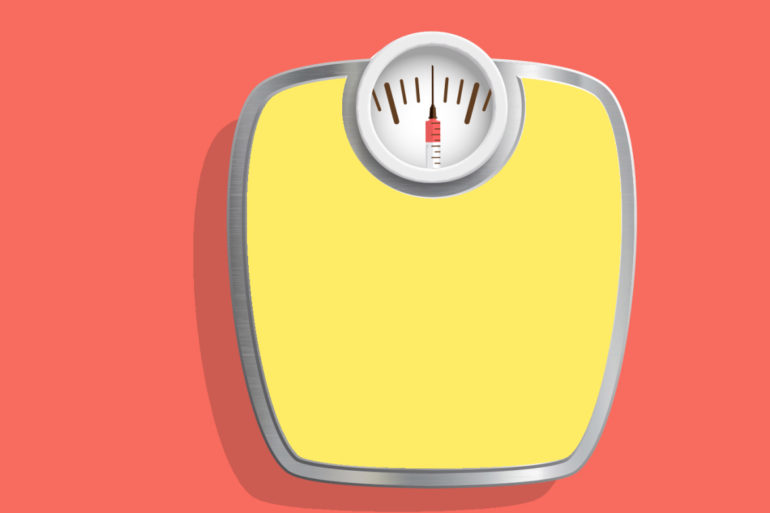
A healthy immune system turns inflammation on and off as needed, calling on white blood cells and sending out proteins to fight infection. Vaccines harness that inflammatory response. But blood tests show that obese people and people with related metabolic risk factors such as high blood pressure and elevated blood sugar levels experience a state of chronic mild inflammation; the inflammation turns on and stays on.

Adipose tissue — or fat — in the belly, the liver and other organs is not inert; it contains specialized cells that send out molecules, like the hormone leptin, that scientists suspect induces this chronic state of inflammation. While the exact biological mechanisms are still being investigated, chronic inflammation seems to interfere with the immune response to vaccines, possibly subjecting obese people to preventable illnesses even after vaccination.

An effective vaccine fuels a controlled burn inside the body, searing into cellular memory a mock invasion that never truly happened.

Evidence that obese people have a blunted response to common vaccines was first observed in 1985 when obese hospital employees who received the hepatitis B vaccine showed a significant decline in protection 11 months later that was not observed in non-obese employees. The finding was replicated in a follow-up study that used longer needles to ensure the vaccine was injected into muscle and not fat.

Researchers found similar problems with the hepatitis A vaccine, and other studies have found significant declines in the antibody protection induced by tetanus and rabies vaccines in obese people.

“Obesity is a serious global problem, and the suboptimal vaccine-induced immune responses observed in the obese population cannot be ignored,” pleaded researchers from the Mayo Clinic’s Vaccine Research Group in a 2015 study published in the journal Vaccine.Obesity
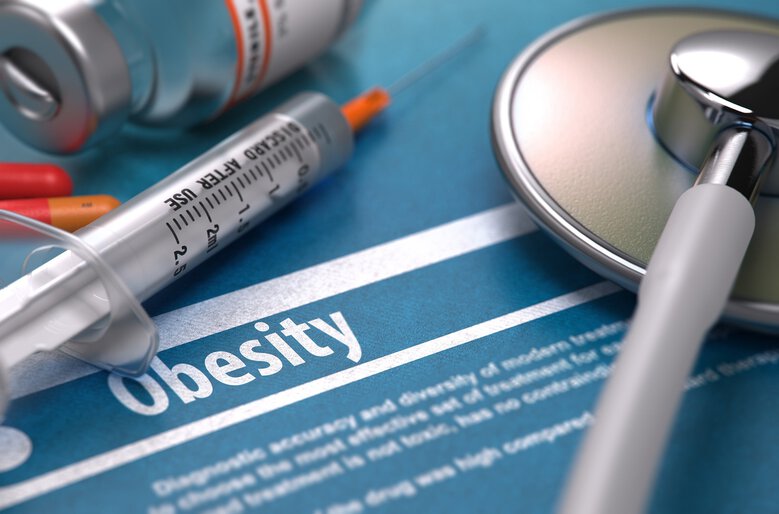
Vaccines also are known to be less effective in older adults, which is why those 65 and older receive a supercharged annual influenza vaccine that contains far more flu virus antigens to help juice up their immune response.

By contrast, the diminished protection of the obese population — both adults and children — has been largely ignored.

“I’m not entirely sure why vaccine efficacy in this population hasn’t been more well reported,” said Catherine Andersen, an assistant professor of biology at Fairfield University who studies obesity and metabolic diseases. “It’s a missed opportunity for greater public health intervention.”

In 2017, scientists at UNC-Chapel Hill provided a critical clue about the limitations of the influenza vaccine. In a paper published in the International Journal of Obesity, they showed for the first time that vaccinated obese adults were twice as likely as adults of a healthy weight to develop influenza or flu-like illness.

Curiously, they found that adults with obesity did produce a protective level of antibodies to the influenza vaccine, but they still responded poorly.

“That was the mystery,” said Chad Petit, an influenza virologist at the University of Alabama.

One hypothesis, Petit said, is that obesity may trigger a metabolic dysregulation of T cells, white blood cells critical to the immune response. “It’s not insurmountable,” said Petit, who is researching COVID-19 in obese patients. “We can design better vaccines that might overcome this discrepancy.”

Historically, people with high BMIs often have been excluded from drug trials because they frequently have related chronic conditions that might mask the results. The clinical trials underway to test the safety and efficacy of a coronavirus vaccine do not have a BMI exclusion and will include people with obesity, said Dr. Larry Corey, of the Fred Hutchinson Cancer Research Center, who is overseeing the phase 3 trials sponsored by the National Institutes of Health.

Although trial coordinators are not specifically focused on obesity as a potential complication, Corey said, participants’ BMI will be documented and results evaluated.

Dr. Timothy Garvey, an endocrinologist and director of diabetes research at the University of Alabama, was among those who stressed that, despite the lingering questions, it is still safer for obese people to get vaccinated than not.

“The influenza vaccine still works in patients with obesity, but just not as well,” Garvey said. “We still want them to get vaccinated.”

]]>
8721
What Seniors Can Expect As Their New Normal in a Post-Vaccine World https://jerseyshorescene.com/what-seniors-can-expect-as-their-new-normal-in-a-post-vaccine-world/ Tue, 04 Aug 2020 20:00:41 +0000 https://jerseyshorescene.com/?p=8609 Content provided by Kaiser Health News ~

Imagine this scenario, perhaps a year or two in the future: An effective COVID-19 vaccine is routinely available and the world is moving forward. Life, however, will likely never be the same — particularly for people over 60.

That is the conclusion of geriatric medical doctors, aging experts, futurists and industry specialists. Experts say that in the aftermath of the pandemic, everything will change, from the way older folks receive health care to how they travel and shop. Also overturned: their work life and relationships with one another.

“In the past few months, the entire world has had a near-death experience,” said Ken Dychtwald, CEO of Age Wave, a think tank on aging around the world. “We’ve been forced to stop and think: I could die or someone I love could die. When those events happen, people think about what matters and what they will do differently.”

Older adults are uniquely vulnerable because their immune systems tend to deteriorate with age, making it so much harder for them to battle not just COVID-19 but all infectious diseases. They are also more likely to suffer other health conditions, like heart and respiratory diseases, that make it tougher to fight or recover from illness. So it’s no surprise that even in the future when a COVID-19 vaccine is widely available — and widely used — most seniors will be taking additional precautions.

“Before COVID-19, baby boomers” — those born after 1945 but before 1965 — “felt reassured that with all the benefits of modern medicine, they could live for years and years,” said Dr. Mehrdad Ayati, who teaches geriatric medicine at Stanford University School of Medicine and advises the U.S. Senate Special Committee on Aging. “What we never calculated was that a pandemic could totally change the dialogue.”seniors-post-vaccine

It has. Here’s a preview of post-vaccine life for older Americans:

Medical Care

  • Time to learn telemed. Only 62% of people over 75 use the internet — and fewer than 28% are comfortable with social media, according to data from the Pew Research Center. “That’s lethal in the modern age of health care,” Dychtwald said, so there will be a drumbeat to make them fluent users of online health care.
  • 1 in 3 visits will be telemed. Dr. Ronan Factora, a geriatrician at Cleveland Clinic, said he saw no patients age 60 and up via telemedicine before the pandemic. He predicted that by the time a COVID-19 vaccine is available, at least a third of those visits will be virtual. “It will become a significant part of my practice,” he said. Older patients likely will see their doctors more often than once a year for a checkup and benefit from improved overall health care, he said.
  • Many doctors instead of just one. More regular remote care will be bolstered by a team of doctors, said Greg Poland, professor of medicine and infectious diseases at the Mayo Clinic. The team model “allows me to see more patients more efficiently,” he said. “If everyone has to come to the office and wait for the nurse to bring them in from the waiting room, well, that’s an inherent drag on my productivity.”
  • Drugstores will do more vaccinations. To avoid the germs in doctors’ offices, older patients will prefer to go to drugstores for regular vaccinations such as flu shots, Factora said.
  • Your plumbing will be your doctor. In the not-too-distant future — perhaps just a few years from now — older Americans will have special devices at home to regularly analyze urine and fecal samples, Dychtwald said, letting them avoid the doctor’s office.

Travel

  • Punch up Google Maps. Many trips of 800 miles or less will likely become road trips instead of flights, said Ed Perkins, a syndicated travel columnist for the Chicago Tribune. Perkins, who is 90, said that’s certainly what he plans to do — even after there’s a vaccine.
  • Regional and local travel will replace foreign travel. Dychtwald, who is 70, said he will be much less inclined to travel abroad. For example, he said, onetime plans with his wife to visit India are now unlikely, even if a good vaccine is available because they want to avoid large concentrations of people. That said, each year only 25% of people 65 and up travel outside the U.S. annually, vs. 45% of the general population, according to a survey by Visa. The most popular trip for seniors: visiting grandchildren.
  • Demand for business class will grow. When older travelers (who are financially able) choose to fly, they will more frequently book roomy business-class seats because they won’t want to sit too close to other passengers, Factora said.
  • Buying three seats for two. Older couples who fly together — and have the money — will pay for all three seats so no one is between them, Perkins said.
  • Hotels will market medical care. Medical capability will be built into more travel options, Dychtwald said. For example, some hotels will advertise a doctor on-site — or one close by. “The era is over of being removed from health care and feeling comfortable,” he said.
  • Disinfecting will be a sales pitch. Expect a rich combination of health and safety “theater” — particularly on cruises that host many older travelers, Perkins said: “Employees will be wandering around with disinfecting fogs and wiping everything 10 times.”
  • Cruises will require proof of vaccination. Passengers — as well as cruise employees — will likely have to prove they’ve been vaccinated before traveling, Factora said.

Eating/Shopping

  • Local eateries will gain trust. Neighborhood and small-market restaurants will draw loyal customers — mainly because they know and trust the owners, said Christopher Muller, a hospitality professor at Boston University.
  • Safety will be a bragging point. To appeal to older diners in particular, restaurants will prominently display safety-inspection signage and visibly signal their cleanliness standards, Muller said. They will even hire employees exclusively to wipe down tables, chairs and all high-touch points — and these employees will be easy to identify and very visible.

Home Life

  • The homecoming. Because of so many COVID-19 deaths in nursing homes, more seniors will leave assisted living facilities and nursing homes to move in with their families, Factora said. “Families will generally move closer together,” he said.
  • The fortress. Home delivery of almost everything will become the norm for older Americans, and in-person shopping will become much less common, Factora said.
  • Older workers will stay home. The 60-and-up workforce increasingly will be reluctant to work anywhere but from home and will be very slow to re-embrace grocery shopping. “Instacart delivery will become the new normal for them,” Dychtwald said.

Gatherings

  • Forced social distancing. Whenever or wherever large families gather, people exhibiting COVID-like symptoms may not be welcomed under any circumstances, Ayati said.
  • Older folks will disengage, at a cost. Depression will skyrocket among older people who isolate from family get-togethers and large gatherings, Ayati said. “As the older population pulls back from engaging in society, this is a very bad thing.”
  • Public restrooms will be revamped. For germ avoidance, they’ll increasingly get no-touch toilets, urinals, sinks and entrances/exits. “One of the most disastrous places you can go into is a public restroom,” Poland said. “That’s about the riskiest place.”
]]>
8609
Estate Planning During a Pandemic: Steps to Take https://jerseyshorescene.com/estate-planning-during-a-pandemic-steps-to-take/ Tue, 04 Aug 2020 12:00:26 +0000 https://jerseyshorescene.com/?p=8598 Content provided by our partner Thomas Streep, Edward Jones ~

The coronavirus pandemic has certainly caused havoc and concern for many people, particularly in regard to their health and their finances – and these two areas intersect in estate planning. So, if you haven’t drawn up your estate plans yet, or you think they may need to be revised, now may be a good time to act.

This suggestion is not strictly based on issues of morbidity – after all, the vast majority of people who contract COVID-19 will survive. However, even if you never become ill or need to be hospitalized, wouldn’t you be glad to know your affairs are in order? If you already have estate plans, you may need to revisit them if your family situation has changed because of marriage, divorce, remarriage, new children, new financial goals, and so on.

Of course, estate planning can be complex, so there’s not a “one size fits all” approach. Nonetheless, here are some of the most commonly used documents and arrangements:

  • Financial power of attorney – A financial power of attorney is a legal document that gives someone the authority to conduct your financial affairs – pay bills, write checks, make deposits, sell or purchase assets – if you were unable to do so yourself. You can establish the financial power of attorney without giving your representative any ownership in your assets.
  • Last will and testament – With a last will and testament, you can choose how you want your assets distributed, appoint an executor to oversee the distribution and name a guardian to take care of minor children. If you don’t have a will, a court might assume these functions, with results you might not have wanted.
  • Living trust – A living trust allows you to leave assets to your heirs without going through the time-consuming, public and often expensive probate process. Also, a living trust gives you significant flexibility in dispersing your estate. You can direct your trust to pass your assets to your beneficiaries immediately upon your death or to distribute the assets over time and in amounts you specify.
  • Health care surrogate – A health care surrogate, sometimes known as a health care proxy or health care power of attorney, is a legal document that appoints a person to act for you if you become incapacitated. Your surrogate has the authority to talk to your doctors, manage your medical care, and make medical decisions for you if you cannot do so.
  • Living Will – A living will, also known as an advance health care directive, lets you specify what end-of-life treatment you do or don’t want to receive if you become terminally ill or permanently unconscious.

All these estate planning tools can be complex, so before taking action, you’ll need to consult with an attorney and possibly your tax and financial advisors, too.

However, during a pandemic, you may encounter a special challenge: Documents such as wills and powers of attorney typically need to be notarized and witnessed – and that may be difficult during a time of social distancing and self-imposed quarantines. But this problem may be solvable because many states have now enacted executive orders or passed laws that permit “virtual” notarization and witnessing of legal documents.

In any case, if the coronavirus pandemic has raised your concerns about the legacy you’d like to leave, take the time now to launch or update your estate plans – you’ll be glad you did.

This article was written by Edward Jones for use by your local Edward Jones Financial Advisor. 

For more information contact:

Thomas Streep    77 N Washington Suite 100 Boston, MA 02114 (617) 227-1306

https://www.edwardjones.com/tom-streep

Or one of our local offices:

Joseph E Serzan III (732) 223-7630      John H Micklus (732) 223-7630     David R Wray (732) 892-0573

]]>
8598
Support “Shop Local” Here At The Jersey Shore https://jerseyshorescene.com/shop-local-at-the-jersey-shore-2/ Sat, 11 Jul 2020 12:30:52 +0000 https://jerseyshorescene.com/?p=2403 By Tracey Hall ~

Shop Local is a theme that now more than ever needs to be a part of our regular routines. When you visit the beach this summer, make sure you pop into town and help our struggling merchants. The Jersey Shore is a “Shop Local” bonanza because so many of our towns have quaint Main Streets that are open for business all year-long.

What happens when you Shop Local:

1. More of your money will be kept in your local economy
For every $100 you spend at locally owned businesses, $68 will stay in the community. What happens when you spend that same $100 at a national chain? Only $43 stays in the community.*
2. You embrace what makes your community unique
You wouldn’t want your house to look like everyone else’s in the U.S. So why would you want your community to look that way?
3. You create local jobs
Local businesses are better at creating higher-paying jobs for your neighbors. When you shop locally, you help create jobs for teachers, firemen, police officers, and many other essential professions.
4. You help the environment
Buying from a locally owned business conserves energy and resources in the form of less fuel for transportation and less packaging.
5. You nurture community
Local business owners know you, and you know them. Studies have shown that local businesses donate to community causes at more than twice the rate of chains.
6. You conserve your tax dollars
Shopping in a local business district means less infrastructure, less maintenance, and more money available to beautify your community. Also, spending locally instead of online ensures that your sales taxes are reinvested where they belong— in your community!
7. You create more choice
Locally owned businesses pick the items and products they sell based on what they know you like and want. Local businesses carry a wid­er array of unique products because they buy for their own individual markets.
8. You took advantage of their expertise
You are their friends and neighbors, and locally owned businesses have a vested interest in knowing how to serve you. They’re passionate about what they do. Why not take advantage of it?
9. You invested in entrepreneurship
Creativity and entrepreneurship are what the American economy is founded upon. Nurturing local business en­sures a strong community.
10. You made your community a destination                                                                                                                           

The more interesting and unique your community is, the more we will attract new neighbors, visitors and guests. This benefits everyone!

*Source: Civic Economics – Andersonville Study of Retail Economics.
It makes sense to keep our small towns along the shore prosperous. This is our home, we are the locals, and we need to keep our businesses alive. Why not stop at the local coffee shop, grab a cup of joe and enjoy a stroll on your favorite Main Street?

]]>
2403
4 Ways To Help Transition Pets To Post-Quarantine Routines https://jerseyshorescene.com/4-ways-to-help-transition-pets-to-post-quarantine-routines/ Thu, 09 Jul 2020 20:00:22 +0000 https://jerseyshorescene.com/?p=8287 As states ease COVID-19 restrictions and people get out of the house to return to work, pets around the country may see their daily routines of hanging out with everyone come to an end.

Some dogs and cats handle routine changes easily. For others, a routine change at home can cause behavior issues, nervousness or separation anxiety.

A Suzy survey of 5,000 U.S. pet owners found nearly 70% of respondents are concerned their pets will have new or additional anxiety when they return to work. It’s important to prepare pets for changes in routine, especially those that are new to a home, for their well-being and harmony of the whole family.

Consider these post-quarantine transition tips:

Make a Plan
The key to any plan is making sure everyone knows what to do. This goes for veteran pet owners and the owners of more than 221,000 new pets adopted or fostered since March, according to the 24Pet ShelterWatch Report. Pet owners should agree on the plan for their pets and details should be shared with children who help with care.

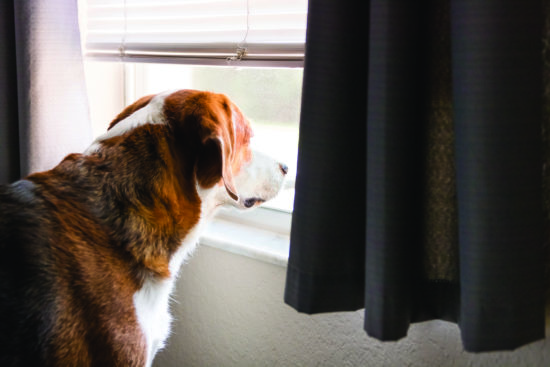
“Pet owners should make a plan with minimal and realistic changes to help their dogs or cats adapt to new routines,” said veterinarian Elizabeth DeLomba, MBA, senior veterinary services consultant at VetriScience Laboratories. “Start by offering your pets’ belongings that make them feel safe and comfortable and add small things that promote mental and physical stimulation.”Dogs in quarantine

Practice the New Routine
Ease your pet into being alone by spending short periods of time away from him or her both in and outside the home and work your way up to hours of separation.

Use practice time to get your dog or cat used to what happens before you leave for work, comfortable with a crate or other safe space and acquainted with a new toy, treat or someone who will check on him or her during the day.

Before you leave, take your pet for a walk or play at home to get energy out prior to your departure. When it is time to leave, don’t make a big deal out of leaving. Say goodbye long before you leave then leave calmly.

Try a Calming Supplement
The survey revealed that 65% of respondents plan to use a nutritional supplement to help their dog or cat cope with any anxiety a new routine brings. Over the counter calming supplements like VetriScience Composure chews can help pets relax during stressful times without changing their personality or energy level. Calming supplements come in bite-size chews or a liquid dosage and can help relieve stress for dogs and cats of all breeds and sizes.

“Fear and anxiety disorders affect 23 million dogs in the U.S. alone,” DeLomba said. “Supplements may offer a convenient approach for managing separation anxiety and other behavioral issues. The ingredients in supplements work together to make a positive impact on behavior and anxiousness, which results in a calmer, more focused pet.”

Keep Them Stimulated
Don’t let your dog or cat feel bored when home alone. Play music, keep a television on or use a white noise machine to create some constant sound. If your pet isn’t into watching television, keep him or her busy with a treat-dispensing toy that requires some work. Or stuff a toy with peanut butter, freeze it and give it to your dog when you leave. These ideas can help keep your pet’s mind stimulated and encourage him or her to focus on something other than being alone.

Start thinking about a plan for your pet and ask your veterinarian if you have concerns about behavioral changes. Learn more and find the full survey results at vetriscience.com.

(Family Features) Photos courtesy of Getty Images #15314

]]>
8287
The Pandemic Has Changed How, What Consumers Eat https://jerseyshorescene.com/the-pandemic-has-changed-how-what-consumers-eat/ Sat, 13 Jun 2020 12:00:53 +0000 https://jerseyshorescene.com/?p=7949 The COVID-19 pandemic has transformed the way customers shop, eat, and think about food, according to the International Food Information Council’s 2020 Food & Health survey.

Eighty-five percent of Americans have made at least one change in the food they eat or how they prepare it because of the pandemic. Among those, 60 percent report cooking more at home. In addition, 32 percent of respondents say they are snacking more, 30 percent are washing produce more often, and 27 percent are thinking about food more than usual.

The survey also found that consumers are thinking more about food safety, environmental sustainability, and putting an increasing focus on healthful foods.

https://www.specialtyfood.com/

]]>
7949
What If You’re Wrong? https://jerseyshorescene.com/what-if-youre-wrong/ Sun, 07 Jun 2020 12:30:54 +0000 https://jerseyshorescene.com/?p=7875 By Tracey Hall ~

Like you, I’ve been thinking a lot lately about the world and how in just a few short weeks we’ve been brought to our knees in fear. 1st this virus- we know so little, when we thought we had good information, we were later told that wasn’t the case anymore. We thought kids were safe only to find out in fact they weren’t. They were wrong. We learned that no drug or vaccine could protect us so we retreated inside the safety of our homes. At least by staying out of the virus’s way, hopefully, we could prevent catching it.

Then the economy collapsed- why? Because we were all sequestered in our homes of course and we humans need to work! But what if we’re wrong? What if we don’t always need to work so hard? Serious lifestyle adjustments have been made, paces have slowed, and what are the things we miss most? Connection– we miss each other. We miss our friends our coworkers our favorite restaurants and shops and shows and so on- we miss touch and face to face conversations.

Then, the riots- long-simmering fear has spewed up volcanic in nature and gripped the entire world in the need to CONNECT. The need to hear each other. The need to start over together as beings, human beings.

The astrology of today is chaotic and things from deep in our collective past are being brought to the surface for us to at last admit we were wrong. For us to feel the vibrations coming from the heartspace of those who have lived in fear and won’t anymore.

The fear shouts out in anger, but also reaches out to link to love. In love, we accept, we honor and we face the wrongs- look at them deeply so we understand the whys and move away from repeating the same things over and over.

You won’t hear it on the news, but there is a shift happening now, an upheaval of norms and a reckoning of wrongs. Mother Earth is breathing again with bluer skies and cleaner waters. But here, during the same moment, one cries out “I can’t breathe.” Those words were carried on the wind and scattered worldwide and people left their homes and gathered to collectively say ENOUGH–

When the dust settles and we all take a deep breath, we’ll see where we went wrong. We’ll know that love is and has always been the answer. We will seek wisdom from the higher powers. We’ll open up to really see nature and stop for a second to listen to the rain and at last look at one another and see the inner light, the wisdom of their years and the love beating in their hearts.

`

]]>
7875